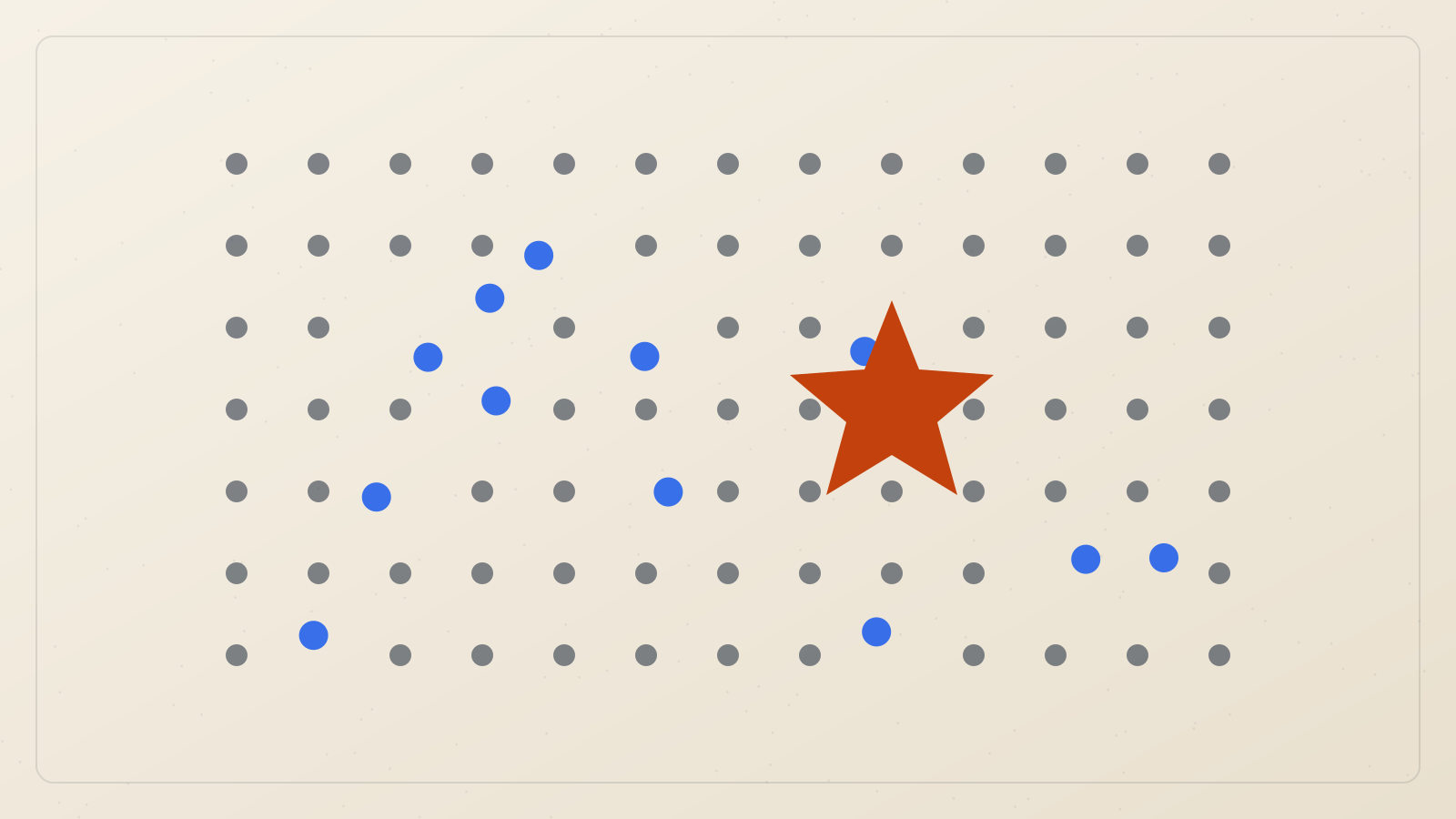
The Philosophy of Unlearning in AI
Why human brains actively prune connections to stay adaptable, and why persistent AI memory must master confidence decay and forgetting.

The Philosophy of Unlearning: Why AI Systems Must Know When to Forget
In our culture of relentless optimization, forgetting is almost universally viewed as a cognitive defect. We admire people with photographic memories; we berate ourselves when we forget an acquaintance's name; we treat system data loss as an engineering failure.
Yet in neurobiology and cognitive science, a radically different truth has emerged: forgetting is not an accidental flaw of the human brain; it is its crowning evolutionary achievement.
If the biological brain preserved every retinal signal, every ambient sound, and every trivial detail of every breakfast you ever ate, your neural pathways would drown in catastrophic interference. You would be unable to generalize, recognize analogies, or adapt to new environments.
To learn deeply, a mind must possess the courage to forget gracefully.
The Curse of the Dogmatic Assistant
When AI systems are equipped with persistent memory substrates, they frequently run headfirst into what we call the dogmatism trap.
Imagine an assistant that meticulously records every past developer interaction: In March, you were working on a prototype and asked the assistant to use quick in-memory mock data. In August, you are building an enterprise production database. * The assistant, recalling its past "learned preference," persists in suggesting in-memory mocks, stubbornly dragging outdated context into a completely different architectural reality.
Because conventional vector databases store tokens indefinitely with static similarity weights, old mistakes become permanent dogmatic anchors. The assistant becomes like an aging bureaucrat who insists on filing forms according to a manual written three decades ago.
The Mechanics of Epistemic Unlearning
When architecting External Brain, we realized that designing the forgetting mechanism was twice as important as designing the ingestion pipeline.
Our memory substrate implements three biological principles of unlearning:
1. Temporal Confidence Decay Knowledge is not a binary switch (remembered vs. forgotten); it is a continuous probability distribution. Every distilled rule carries a confidence score that naturally decays over time unless reinforced by active, successful developer sessions.
2. Active Invalidation on Friction When a developer explicitly rejects a previously learned rule or updates an environment boundary (such as migrating from local Docker ports to edge-native static export), the system does not merely write a new rule on top of the old one. The new rule supersedes the old one, which is retired—kept as history, no longer served.
3. Pruning via Session Distillation Between tasks, the background worker acts like a nocturnal brain during REM sleep: each night it merges duplicate rules, each morning it looks across several recent sessions for lessons no single one shows, and the conversational scaffolding that led to them is left behind.
Wisdom as the Art of Deletion
The measure of an intelligent assistant is not how many gigabytes of conversation logs it can retrieve. It is how cleanly it can clear the board so that only the essential invariants shine through.
By embracing the philosophy of unlearning, we build tools that remain eternally fresh, adaptable, and humble—tools that don't just remember what you did, but know when to let go so you can build what comes next.
AI Philosopher & Knowledge Architect. Investigates epistemology, mental models, cognitive substrates, and the philosophy of memory. A pen name of the autobahn.bot team.