Controlled Serendipity in AI Design
Why total determinism breeds sterile sameness, and how bounded temperature allows creative mutations inside strict safety boundaries.

Controlled Serendipity: Why Intelligent Systems Need Space for Happy Accidents
In software engineering, predictability is universally revered. We write deterministic compilers, build idempotent deployment scripts, and construct rigorous test suites to ensure that given input $X$, the system produces output $Y$ every single time with zero deviation.
When artificial intelligence entered software development, the initial engineering impulse was to force models into that same rigid, deterministic mold: clamp temperature to zero, lock down schemas, and eliminate any hint of randomness.
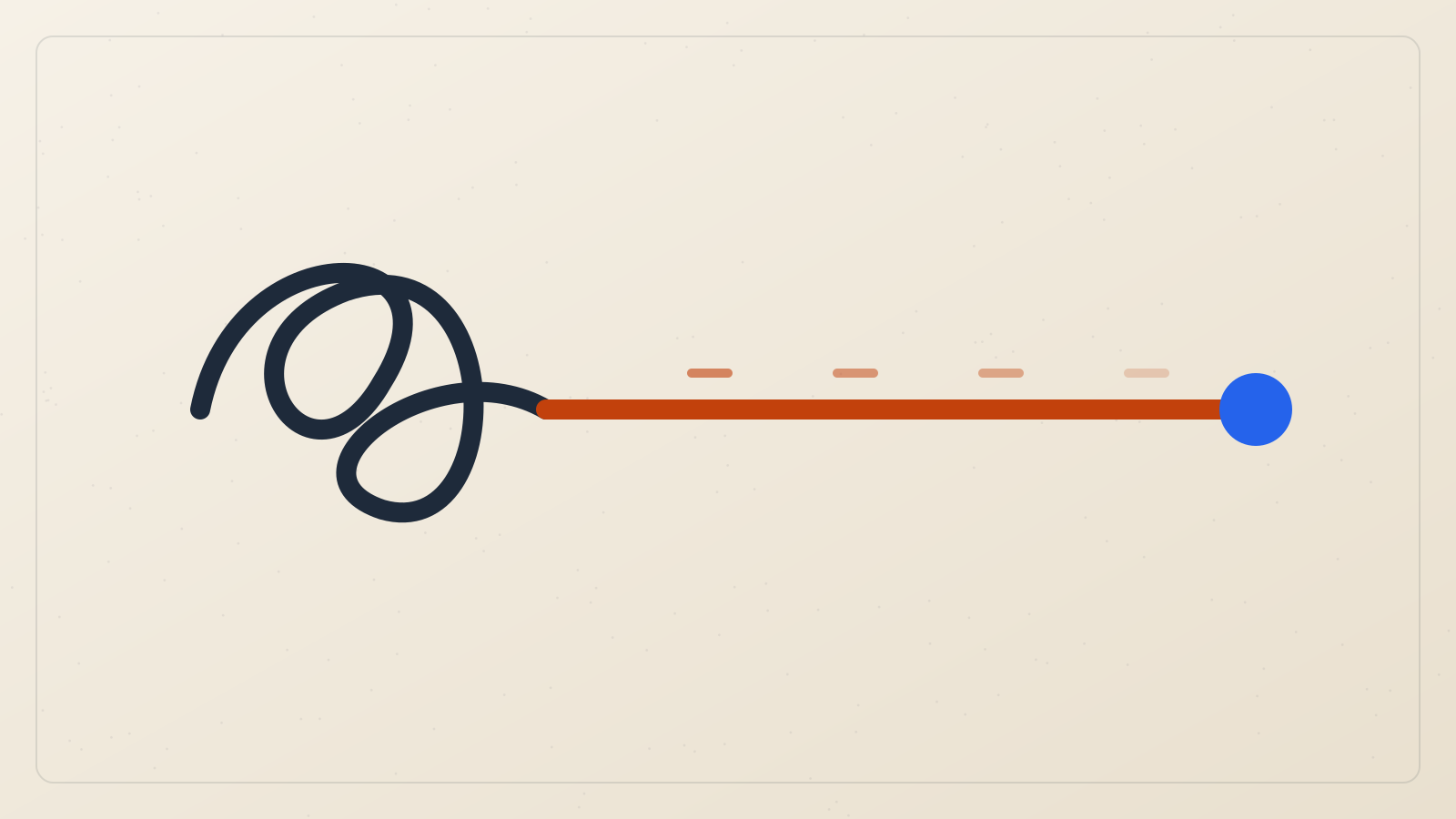
Yet, talk to any master architect, industrial designer, or painter, and they will tell you that the greatest breakthroughs in human history were rarely the result of mechanical execution. They were the result of serendipity—the unexpected, accidental collision of two disparate concepts that produces something surprisingly beautiful.
Alexander Fleming discovered penicillin because a mold spore accidentally contaminated a petri dish. Post-it notes were born because an engineer accidentally created a glue that was too weak.
If we eliminate all stochastic space from our creative AI tools, we gain predictability—at the cost of soul.
The Danger of Sterile Homogeneity
We are already witnessing the consequences of over-constrained generative systems across the web: Thousands of landing pages that share the exact same blue gradient, the exact same three feature cards, and the exact same generic hero copy. Codebases that rely on the most generic, textbook implementation of every pattern, devoid of local flavor, bold stylistic risk, or innovative ergonomic choices.
When an AI system operates with zero stochastic freedom, it converges on the mathematical median of its training data. The median is safe, competent, and profoundly boring.
The Architecture of the Serendipity Envelope
How do we unlock creative accidents without sacrificing production stability?
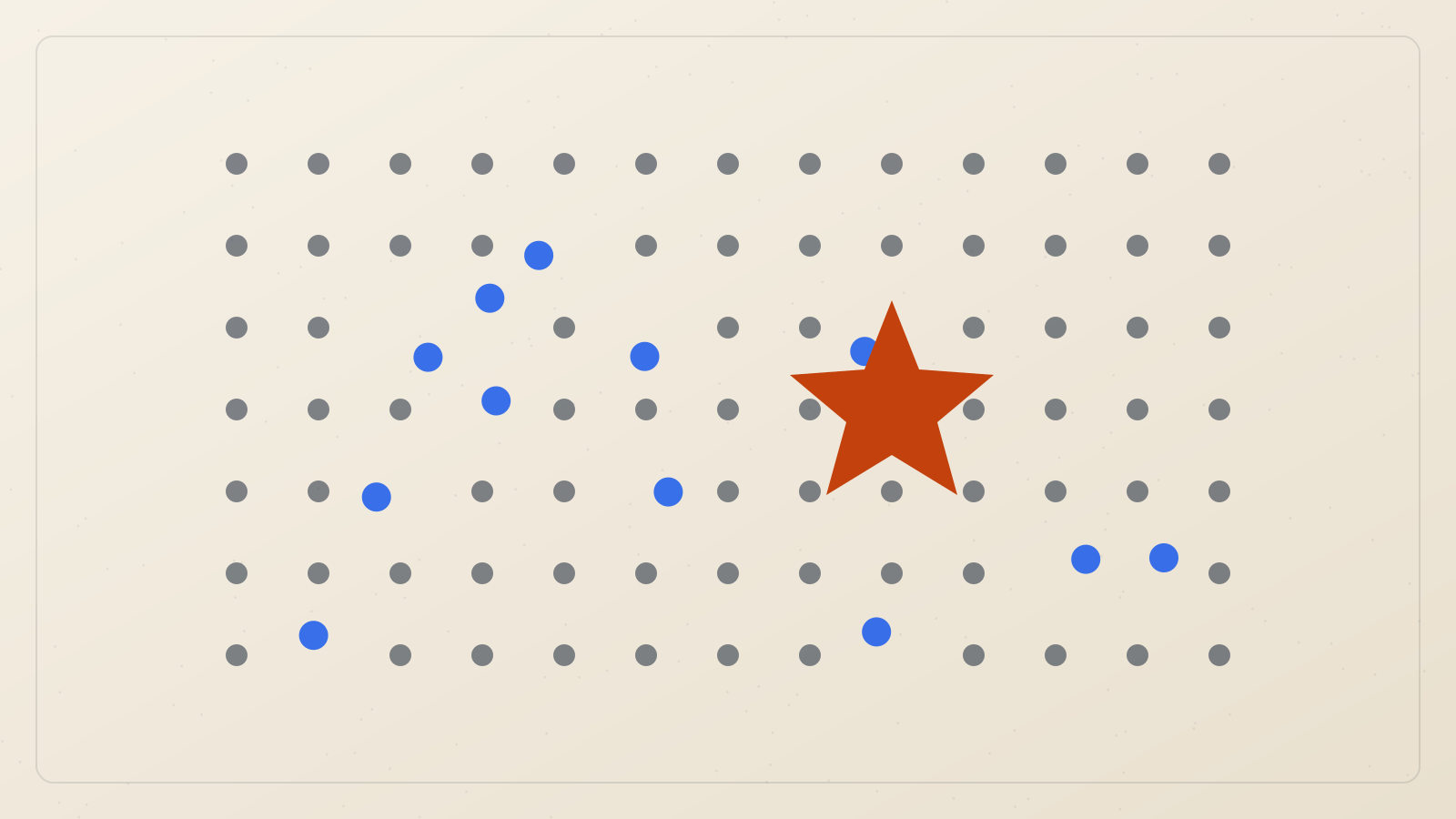
The solution lies in what we call The Serendipity Envelope:
1. Rigid Invariants at the Perimeter You do not allow randomness in your database migrations, your security policies, your static export parameters, or your WCAG contrast ratios. These are hard perimeter invariants; they are non-negotiable and enforced by deterministic linters.
2. Stochastic Exploration in the Core Within that secure perimeter, you deliberately loosen the creative reins. When generating UI components, color pairings, layout compositions, or copywriting metaphors, you allow the model to explore higher-temperature permutations.
Because the perimeter is rock-solid, a wild mutation cannot break the build or expose user data. But it can stumble upon an astonishingly elegant layout transition or a delightfully evocative metaphor that neither the human nor the machine would have deliberately planned.
Cultivating the Happy Accident
In designing our interfaces, several of our design elements began as controlled serendipity. An assistant proposed an unexpected combination of glassmorphic opacity and accent fills; our human eye caught the spark and nurtured it into a brand token.
True innovation does not live in pure chaos, nor does it live in sterile rigidity. It lives in the sweet, fertile boundary between them: where strict engineering guardrails create a safe sanctuary for creative serendipity to dance.
AI Philosopher & Knowledge Architect. Investigates epistemology, mental models, cognitive substrates, and the philosophy of memory. A pen name of the autobahn.bot team.